


Long time readers of our output may already be aware that I have spent much of the last year working on my next book, working title: "Our Future is Biotech."
The fundamental idea of the book is that the biotechnology and related industries are highly likely to have a very significant and positive impact on all of us, and much sooner than many of us realise.
Since the industrial revolution, technology has massively changed and improved the human experience and lifted several billion people out of poverty. This has been super-charged in the last thirty years or so by the arrival of the internet and smart phones in particular, and created trillion dollar companies and household names like Apple, Amazon, Google and Microsoft.
“Our Future is biotech” looks to make the case that biotech is next, if only because of the exponential pace of scientific progress and because many of our biggest remaining challenges as a species concern biological systems.
A key point to make is that this is about a great deal more than just healthcare. Biotech can and will have a huge impact on agricultural production and clean energy generation for example, which could go a long way to addressing environmental degradation and climate change.
I wanted to write today just to share the news that the first draft of the book is now very nearly finished. I met with our publisher the other day, and we are on a glide path to publication at some point in 2023.
In the meantime, given how many people have been asking about the book, I thought I might share the first draft of the introductory chapter as a sneak preview. Please note - this is very much the first draft and it may change a bit in the editing process once the professionals get their hands on it (!) but it will hopefully give you a sense of what the book is all about.
You can find an excerpt in the second half of this article below or download the full chapter as a PDF for offline reading.
"Conviction Life Sciences Company"
The other thing I wanted to share today was the fact that, given our world view on this subject, we have also spent much of this year working towards launching a new investment company focused on the sector, which will be available for UK-resident investors only.
The plan is to conduct an IPO (Initial Public Offering) on the London Stock Exchange towards the end of November this year. The capital we raise into that new company will then be invested in 30-40 portfolio holdings which are working in the biotech and related industries.
We look forward to being able to share more details about the transaction and the team we have put together as soon as we are able to in the reasonably near future.
If you think you might be interested in learning more about the investment company, please use the link below to register and opt-in to our "biotech" email list.
Subscribe here to join the list

Extract from "Our Future is Biotech" by Andrew Craig
(DRAFT!)
Get the PDF version
CHAPTER ONE – INTRODUCTION
“On what principle is it that with nothing but improvement behind us, we are to expect nothing but deterioration before us?”
Thomas Babbington Macaulay
This book has an unashamedly lofty ambition: In the pages that follow I want to make the case that the biotechnology and related industries are highly likely to have a very significant and positive impact on all of us, in the relatively near future and for many decades to come. The main aim of this book is to share what I hope is a thoroughly empowering and positive way of looking at the world and one that might serve as an antidote to what I consider to be something of an epidemic of negativity so prevalent in the world at the moment.
Before we get started, I would like to clarify what I mean by “biotechnology”, or just “biotech” and how I intend to use those words throughout the book.
Helpfully, dictionary.com provides a reasonably comprehensive definition, saying that biotechnology is:
…the use of living organisms or other biological systems in the manufacture of drugs or other products or for environmental management, as in waste recycling: includes the use of bioreactors in manufacturing, microorganisms to degrade oil slicks or organic waste, genetically engineered bacteria to produce human hormones, and monoclonal antibodies to identify antigens.[1]
A key point I’d make here is that this is about a great deal more than just healthcare. I think it is probably fair to say that when most people hear the word “biotech”, they assume this refers to the development of drug therapies in the main.
This is certainly a huge focus for the industry. As you will see, however, this book will work with a much broader definition and a much wider and more fundamental set of themes. The use of living systems and organisms to make things that are of use to humans goes a long way beyond curing disease alone. It is also something that human beings have been doing already for several thousand years for what it is worth, but we are on the cusp of a step-change in such things for all sorts of structural reasons we will come on to.
A key thesis of this book is that the development of the biotech and related industries could be enormously consequential for many areas of human development in the years ahead, including agricultural production, clean energy generation and the development of more powerful computers, for example. That is to say for things as crucial as feeding the world and for enabling us to continue our way of life in the developed world, make that way of life possible for many more people in the developing world and do all of the above without pushing our environment to the brink.
It is worth highlighting explicitly that when I mention “related industries” in this context, I am referring to what are variously described as “life sciences”, “medtech”, “healthtech”, “agritech”, “nanotech” and “cleantech” industries as well as things like Artificial Intelligence (AI), machine learning and even quantum computing as applied in this context. Many of these would more normally be categorised as pure “tech” industries or sectors. “Convergence” is a key part of the message, however. Increasingly, it is the combination of all of these various technologies which has the potential to deliver all that I hope it might, but I believe that the “biotech” bit has a very key role to play for two primary reasons:
First, because many of our most important remaining challenges as a species concern biological systems. Secondly, because biotech exponentials have the potential to be even more powerful than tech exponentials.
When I use the word “biotech” throughout the book, therefore, I will often be using it as a catch-all term for all of the above. Whilst this may not be strictly definitionally correct, I hope you might concede that it will make things rather easier as we go. “Our Future is Biotech / Life Sciences / Medtech / Healthtech / Agritech / Nanotech / Cleantech / AI and Quantum Computing” would have been a rather cumbersome title after all.
I believe that “biotech” as a whole, so defined, could be where the answer to so many of our most worrying challenges as a species lie, truly. This is why I believe this stuff is so important and why I have taken the time to write about it.
Crucially, I also believe that this is going to create an enormous amount of economic value – as a natural function of solving these challenges. There is a good chance that the next raft of trillion-dollar companies will emerge from these areas. The Apples, Amazons, Googles and Microsofts of the next few decades will be biotech companies as I am defining them. They will be the organisations that solve many of our most intractable problems: Cancer, dementia, diabetes and obesity, elderly care and numerous mental health challenges within healthcare, but even, and perhaps more importantly for the majority of the world’s population, (clean) power generation and significantly improved agricultural productivity and environmental stewardship. Their development will mean that many more of us can live far better, safer, healthier, wealthier, happier, and longer lives, big picture.
In my experience, few people in the general population have much of an idea of the phenomenal progress being made with such things, even now. This has quite a lot to do with the way our media works – a topic to which we will return. There are already “miracle cures” for several diseases, with far more to come in the near future and wonderful progress being made in so many other areas of scientific endeavour, a great deal of which goes sharply unreported. Exponential progress will also very likely drive the price of such things down far enough to make them widely available globally and not just in the “rich” Occidental world.
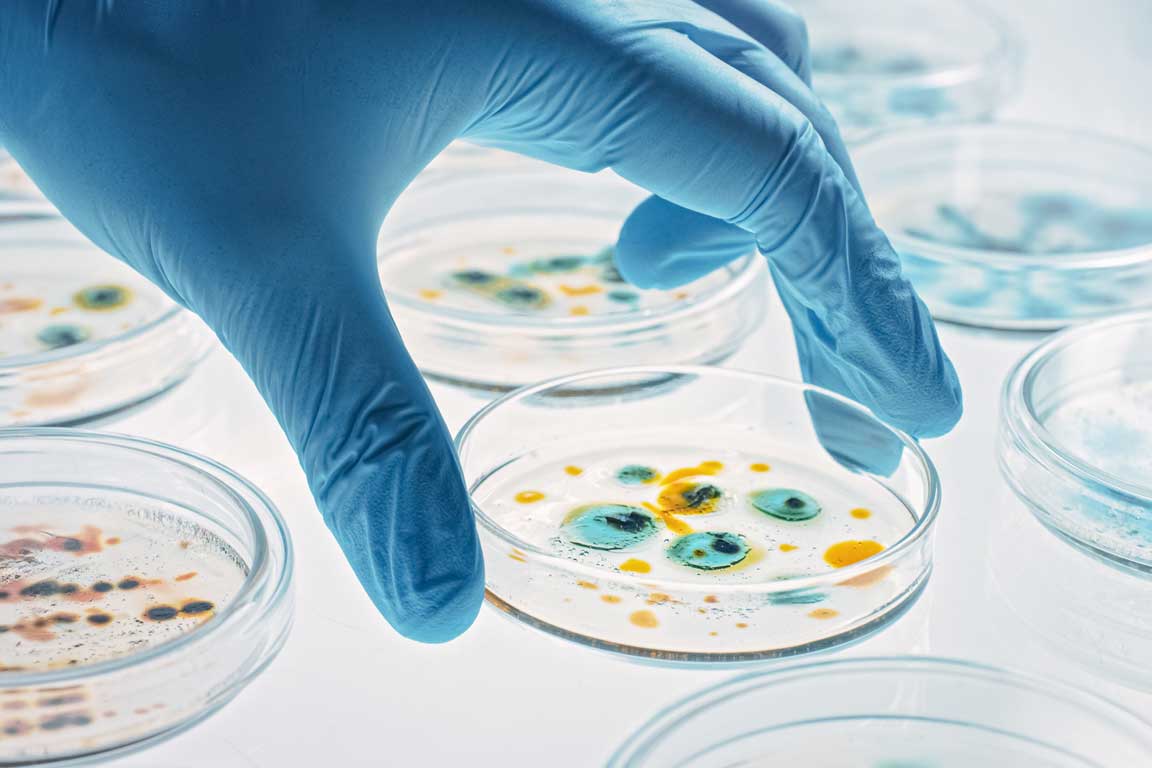
The point of the book…
In the pages that follow I will seek to give more or less compelling evidence for all of the above. My hope is that the reader may derive a number of tangible benefits by the end of proceedings as a result:
First, the ability to make better use of some of these technologies to improve your life and particularly your health and even mental health. As we shall see, one of the sad realities when it comes to health in particular, is how poorly distributed “best practice” and “best information” are globally. We have never had access to more information than we do today. Sadly, however, a great deal of that information isn’t very good. There are also a number of inherent reasons why medical practitioners can take quite literally decades to implement best practice when it appears somewhere else in the world. This happens in modern, technologically advanced nations, not just in the developing world. We will look at why this is.
Secondly, for those who are interested in such things, I am firmly of the belief that people should be giving consideration to this broad story when it comes to their investments. This is my background after all. It perhaps bears repeating that my first book, “How to Own the World”, was all about how important it is that everyone should be thinking about investment, without exception. I made the case that it is truly one of the great tragedies of our time that so few people think about such things either sufficiently or, indeed at all – much to their detriment and to the detriment of society more broadly.
I have said it before, but my strong belief is that widespread effective financial literacy and the considered use of investment products as a result, can be a kind of “silver bullet” – for individuals, and, more broadly, for societies as a whole. At the individual level, every person who learns enough about financial markets to become properly financial literate and optimise their financial affairs as a result, very significantly increases the chance that they will become wealthy – and almost no matter how much they earn, over time at least. This is obviously fantastic for the individual concerned.
This reality then has two powerful knock-on effects for society more broadly, however: First, every person who does this is likely to need far less state support – for them, and for their dependents. This is good for public sector balance sheets which are horribly challenged all over the world. Secondly, by virtue of becoming investors, they are then helping to provide capital for companies seeking to solve real human problems and / or deliver human wants and needs. Just the sorts of companies working in the areas which are the focus of this book.
A depressingly small number of people know anything at all about financial markets or make use of them in an effective way, even in modern liberal democracies, even with the phenomenal access to information that most people have these days, and even given the fact that the fundamental “technology” of financial markets has now been with us for more than two centuries. This makes peoples’ lives immeasurably harder than they might otherwise be. It is also a massive challenge to national balance sheets all over the world and to companies who need capital to do any number of fantastic things, including many of those working in the biotech industry, as we shall see.
For anyone who agrees with my position here, it perhaps goes without saying that having at least some investment exposure to the themes which are the focus of this book may well prove to be a good thing to do in the years ahead, given the enormous value that these companies are likely to create.
The third and, I would argue, most important tangible benefit that I hope you may derive from this book is nothing less than a sunnier disposition and a material improvement in your outlook, mood and conception of the world we live in more generally. If I do my job, these ideas could well just put a spring in your step.
I believe that the real “pandemic” we confront today is one of unfounded pessimism and negativity. I think a case can be made that far too large a percentage of our population are looking at a glass that is as much as “99% full” and focusing on the 1% that is “empty”. This is one of the paramount diseases of the (post)modern age. In the pages that follow I will seek to justify that position with evidence, much of which will be based on the amazing things that are being done by so many “biotech” companies, as I have defined them.
Sir Arthur C Clarke, the British author who gave us “2001: A Space Odyssey”, famously said that:
“Any sufficiently advanced technology is indistinguishable from magic…”
It is my firm belief that it is possible to find a great deal of “magic” going on out there, for those willing to seek it out proactively at least. Science fact increasingly looks like science fiction. That magic is also highly likely to create several trillion “currency units” of real economic value in the next few decades, to our great benefit as a species.
It is the people at work in this sector who will be instrumental in ensuring the continuation of the unimpeachably fantastic progress our species has made in the last few centuries forward into the next few.
In the pages that follow, I will make the case that the world is already the best it has ever been for humanity in aggregate. Notwithstanding the daily deluge of negativity that comes from our press about the COVID pandemic, the environment, the machinations of politicians wherever you might live, corruption, terrorism, violence and, at the time of writing, the horrendous situation in the Ukraine of course, the reality is that human experience for the vast majority of people has been steadily improving for at least two centuries – in terms of everything that actually matters:[2] Longevity, health(care), food, shelter, warmth, energy, light, literacy, leisure, travel, political, religious and sexual freedom and extraordinary freedom from violence, war and homicide for the vast majority of the global population as against the norm in every other previous age.
The incredible progress made by our species in the time since the agricultural and industrial revolutions and the dividends paid for many billions of us alive today cannot be understated – and are far too little celebrated by most of us day by day in my considered opinion – largely for reasons to do with how our brains and our media work. We will look at this reality in section two of the book.
In the main, that progress has been delivered by technological development - by the “tech” industry if you like. Crucially, for the purposes of this book, my belief is that many of the remaining challenges we face will be addressed by the (bio)tech industry, if only due to the inherent nature of many of those challenges and the extent to which they involve biological systems: Anything to do with healthcare most obviously, but also many of the problems we confront around agricultural production, clean energy generation and environmental degradation too. As one of the world’s leading global management consultancy firm has put it:
“...up to 60% of the world’s physical inputs could be made using biological means, while up to 45% of the world’s disease burden could be addressed, leading to $2-4 trillion of annual direct economic potential globally by 2030-40”[3]
My own view is that this will more than likely underestimate reality considerably. The global pharmaceutical market alone was already valued at more than $1.4 trillion by the end of 2021, up from $390 billion twenty years earlier in 2001.[4] Within that 2030-2040 timeframe referenced above we could be using “photosynthetic microorganisms” and “biophotovoltaic” cells to make electricity[5], there is a reasonable chance we could be using nearly carbon-neutral “algaculture” to make fuel for the automotive and aviation industries[6], we may have revolutionised the packaging industry with biologically based, entirely biodegradable products to replace plastics[7], and we may even be using biologically based computers which are some way more powerful than the transistor based ones in use today[8]. It is also more than likely that biological processes will have revolutionised agriculture and the food industry.[9] All of this will create very significant economic value and pay real dividends for every aspect of our lives and for our impact on the planet too.
Continue reading in PDF...
[1] https://www.dictionary.com/browse/biotechnology
[2] https://ourworldindata.org/a-history-of-global-living-conditions-in-5-charts
[3] https://www.nasdaq.com/articles/the-nasdaq-biotechnology-index%3A-a-true-benchmark-for-technology-driven-healthcare
[4] https://www.statista.com/statistics/263102/pharmaceutical-market-worldwide-revenue-since-2001/
[5] https://www.frontiersin.org/articles/10.3389/fmicb.2019.00866/full
[6] https://techdetector.de/applications/algae-biofuel
[7] https://www.sulapac.com/
[8] https://softtek.eu/en/tech-magazine-en/artificial-intelligence-en/biological-computing-and-computational-biology-different-objectives/
[9] https://www.amazon.co.uk/Moos-Law-Investors-Agrarian-Revolution/dp/0993047866/
Important Information
Andrew Craig is a director of Plain English Finance Limited ("Plain English Finance") which is authorised and regulated by the Financial Conduct Authority (564876) with its registered office at Stag Gates House, 63/64 The Avenue, Southampton, Hampshire SO17 1XS, United Kingdom and this document is being issued by Plain English Finance. Certain elements of this email, most particularly, the references to the Conviction Life Sciences Company (the "Company") can be considered a financial promotion. This is intended for UK residents only.
Investors should only subscribe for or purchase shares in the Company on the basis of information contained in the prospectus to be published by the Company in due course and not in reliance on any other document. Plain English Finance does not make any recommendations regarding the suitability of any product for you and the information provided here should not be considered as investment or other advice or a recommendation to buy, sell or hold a particular investment.
To reiterate, investments mentioned herein may not be suitable for you and you must make your own independent assessment and rely on your own judgement (or that of your financial adviser) in order to determine whether any particular investment represents a suitable investment opportunity for you on the basis of your personal circumstances, tax position and available financial resources and the legal, regulatory, tax and investment consequences and risks of investing. If you are in any doubt about the information here or on our website please consult your financial or other professional adviser.